Explore some of Chicago’s most famous haunted places through the true crimes, tragedies, people, and historical events behind their ghost stories. Chicago may have been shaped by infamous gangsters, headline-making crimes, devastating disasters, and more than a few unsolved mysteries, but some of its most historic locations have become legendary haunts.
Behind many of Chicago’s haunted sites is a real story that’s just as fascinating as the folklore. From the site of the St. Valentine’s Day Massacre to a downtown hotel with more than a century of stories attached to its halls, we dig deep into the history behind some of Chicago’s best-known ghost tales and bone-chilling accounts.
Chicago’s Haunted History: Where Fact Meets Folklore
Chicago’s haunted history is closely tied to the city’s extraordinary architecture and historic buildings. Although many of these places serve a different purpose today, their walls still hold stories connected to some of Chicago’s most infamous crimes, tragedies, and ghostly legends.
The city has no shortage of chilling tales. Many of its best-known haunted sites trace their stories back to real events, from Prohibition-era Chicago and gangland beer wars to infamous crime scenes, historic disasters, and buildings that have accumulated legends over the years.
Several of these stories overlap with the true crime history covered on the Chicago Crime Tour and Night Crimes Tour. Join a tour to learn more about the people, places, and events behind Chicago’s legendary haunted history.
Chicago’s Famous Haunted Places & The Stories Behind Them
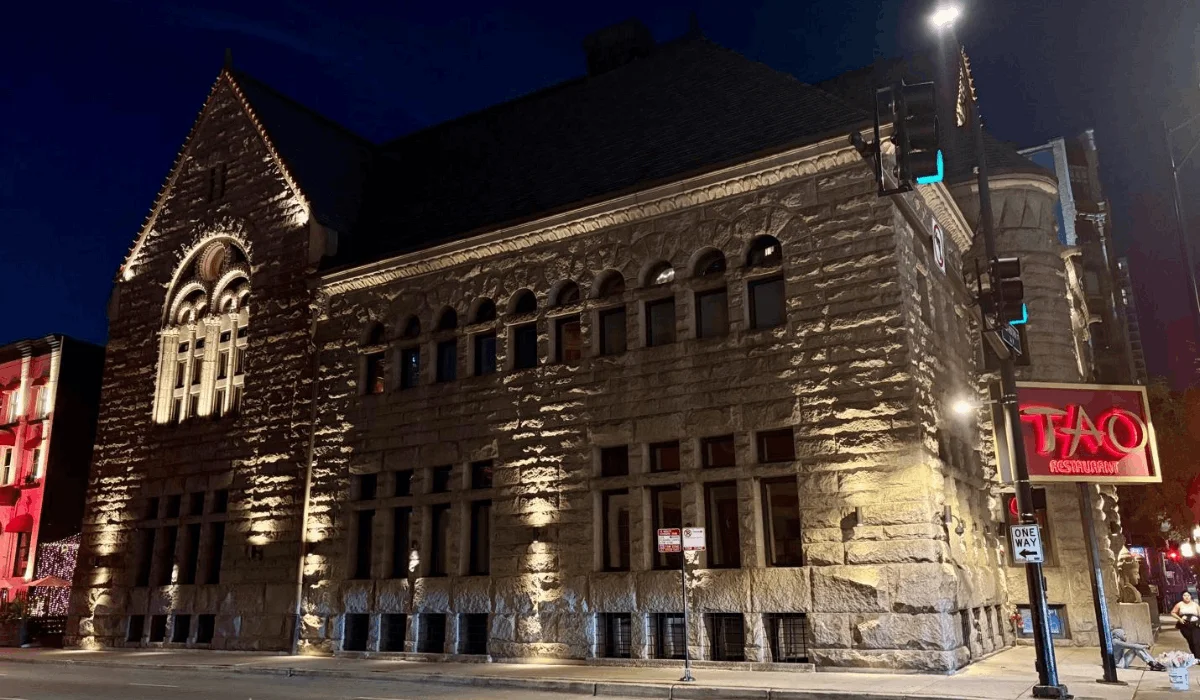
Tao – SS Eastland Disaster Temporary Morgue
The ghosts of victims long ago may crowd the dance floor of one of Chicago’s most notorious nightclubs. Most locals know Tao as a nightclub, where drinks, DJs, and dancing are on the menu. But the history of the building that houses this nightclub may be more interesting than going dancing.
The original structure at 632 N. Dearborn resembles a Romanesque Revival castle. Architect Henry Ives Cobb created a structure grand enough to house the Chicago Historical Society in 1892. The gray limestone walls have seen some gruesome sights, bad dance moves aside.
This city building has served multiple uses. The most infamous was as a temporary morgue during the SS Eastland Disaster. In 1915, a ship carrying approximately 2,500 passengers capsized while still tied to the dock in the Chicago River. The disaster resulted in 844 deaths, overwhelming the city’s morgues. This historic Chicago landmark became a temporary morgue for victims.
Some say the ghosts of the SS Eastland still haunt the contemporary nightclub; some say it’s loud music and good lighting.
Cook County Criminal Courthouse
The last person sentenced to hang in the gallows next to the Cook County Criminal Courthouse was “Terrible” Tommy O’Connor. The gallows were no longer used afterward. While the story of Tommy is unknown to most, he managed to evade the gallows and was never heard from again. Many before him were not so lucky.
Approximately 90 men, and no women, were hanged between 1892 and 1921. The Romanesque-style building resided next to the Cook County Jail and gallows. The site now boasts a Chicago Fire Department house, Engine 42, among other companies.
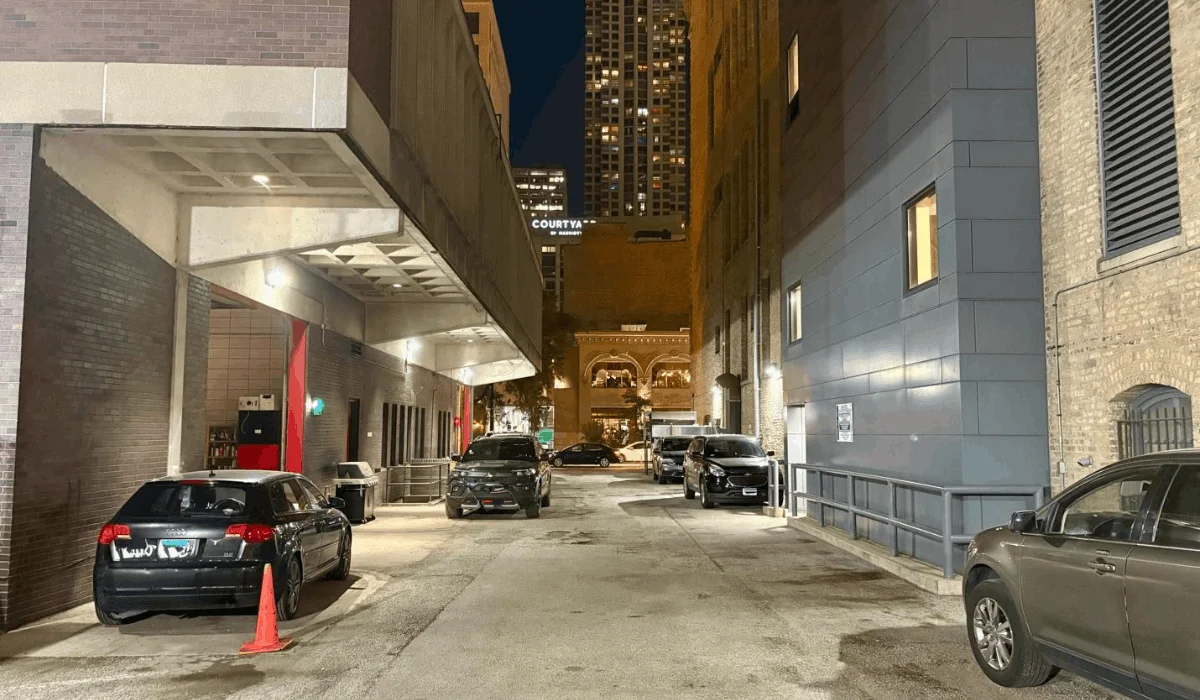
Today, you can visit the area and explore this and other historic Chicago gangster and crime locations. Stop by and see if you feel any paranormal activity. There is even a hidden bar in the alley with some very special drink options that may help conjure up the spirits you are looking for.
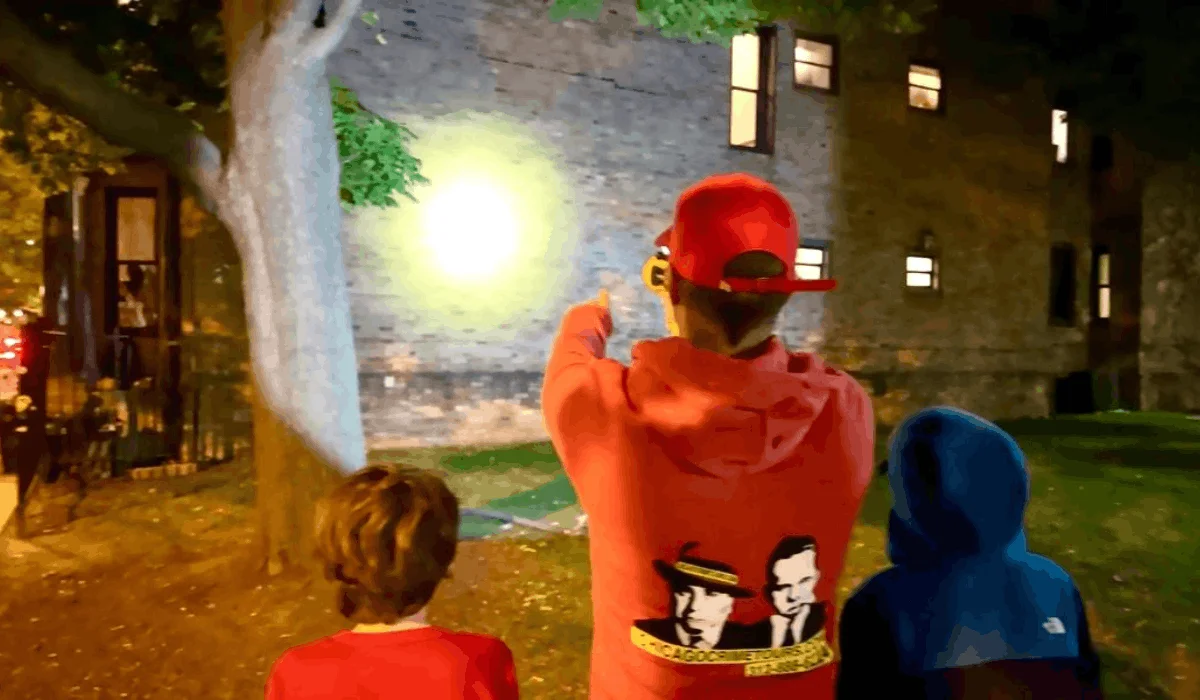
St. Valentine’s Day Massacre
On February 14, 1929, residents of nearby buildings may have heard Tommy guns turn the walls to powder. Nearly 100 years later, stories persist that the ghosts of the seven men who died that day still haunt the area.
The St. Valentine’s Day Massacre site remains one of the most infamous locations in Chicago gangster history. The story, as well as its ghosts, lives on as part of the legend that made Chicago world-famous for its gangsters and Prohibition-era gangland wars.
Go out to eat at a nearby restaurant, or across the street, and ask your server about the ghosts of the St. Valentine’s Day Massacre and why this site remains part of Chicago’s haunted history.
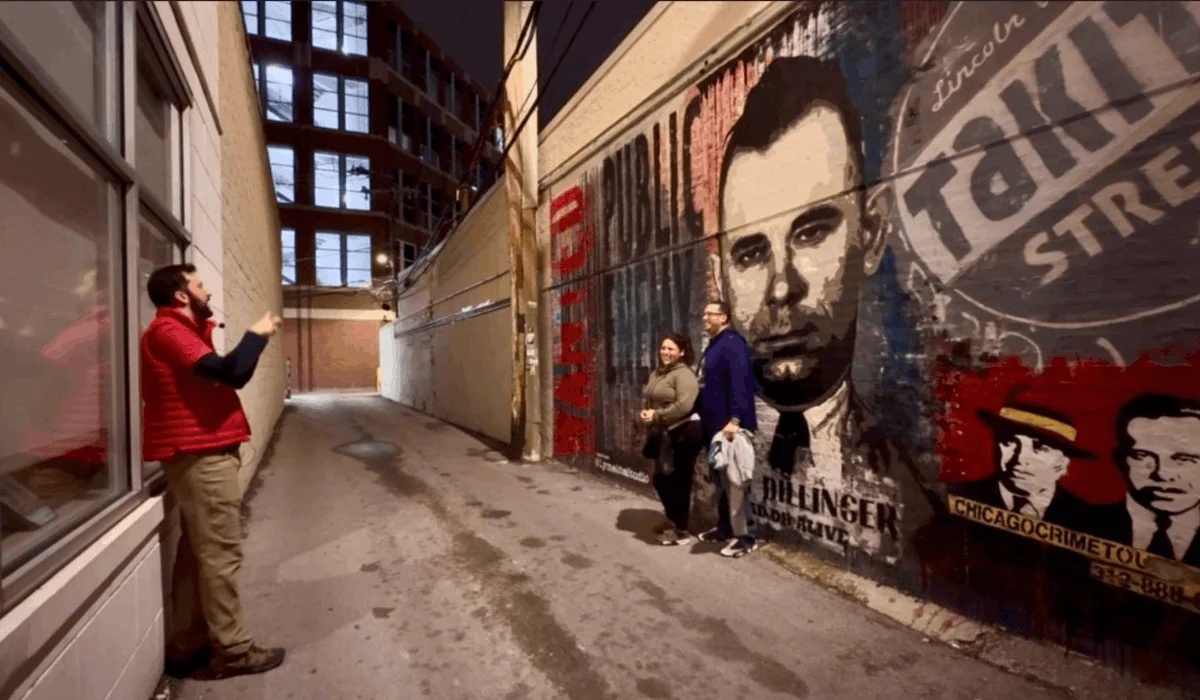
Dillinger’s Alley
John Dillinger walked his last steps after seeing a film on a hot summer night on July 22, 1934. Did his ghost remain to haunt the nearby theater and businesses?
The notorious bank robber was shot by federal agents near the mouth of an alley beside the Biograph Theater in Lincoln Park. His death became another chapter in Chicago’s infamous crime history, and stories of his ghost have since become part of the neighborhood’s local lore. The FBI’s history of John Dillinger documents the events surrounding that night.
Today, you can walk through the area and pose for a photo with your gang at the John Dillinger mural in the alley where one of Chicago’s most infamous criminal stories came to an end.
Experience Chicago’s True Crime History
The Chicago Crime Tour and Night Crimes Tour focus on the true crime stories behind the legends. Sometimes the truth is scary enough without the ghosts.
Strip away the supernatural details and you’re often left with something just as compelling: infamous crimes, larger-than-life characters, historic tragedies, and events that left a lasting mark on Chicago. While many of these legendary figures and locations have inspired ghost stories over the years, the tours focus on the documented history and memories left behind at historic crime scenes across six different Chicago neighborhoods.
Explore the places where these stories happened and learn more about the people and events that made Chicago’s true crime history legendary on an upcoming Chicago Crime Tour or Night Crimes Tour.
Frequently Asked Questions About Chicago Haunted History
What are some of the most famous haunted places in Chicago?
Some of Chicago’s best-known haunted locations include the Congress Plaza Hotel, Hull House, the site of the St. Valentine’s Day Massacre, and the area associated with the Iroquois Theatre fire. Each has accumulated its own ghost stories, although the amount of documented history behind those stories varies considerably.
Are Chicago’s ghost stories based on real events?
Many are connected to real people, crimes, or tragedies, but that doesn’t mean the supernatural parts of the stories are historically documented. Events such as the St. Valentine’s Day Massacre and Iroquois Theatre fire are very real chapters of Chicago history. Ghost stories appearing afterward belong to folklore and local legend.
Are any places from Chicago’s gangster history said to be haunted?
Yes. Several locations connected to Chicago’s gangland era have developed ghost stories over the years, including the former site of the St. Valentine’s Day Massacre.
The Biograph Theater, where John Dillinger was killed by federal agents in 1934, has also been associated with stories of his ghost. These reported hauntings are part of Chicago folklore, while the crimes and historical figures behind them are well documented.
Why does Chicago have so many ghost stories?
Chicago has experienced dramatic periods of growth, devastating fires and disasters, notorious crimes, and Prohibition-era mobster wars, creating plenty of real history from which legends could grow.
Historic buildings, theaters, hotels, cemeteries, and crime scenes have accumulated stories as they’ve been passed from one generation to another. In many cases, Chicago’s haunted history is a mix of documented events and folklore added long after the fact.