Chicago’s gangster history in the early 20th-century tells an exciting and dangerous tale, from rapid growth and bustling neighborhoods to the dramatic rise of organized crime. Between the 1900s and 1930s, key events like Prohibition, The Great War, and The Great Depression created social and cultural periods that have fascinated historians, locals, and visitors alike. Exploring Chicago gangster history by decade offers a glimpse into the people, events, and neighborhoods that made this era unforgettable.
Chicago in the Early 1900s and 1910s– The Beginning
Called the “grandfather of godfathers” by author Lawrence Binda, James Colosimo is the founding father of the Chicago gang now known as the Outfit. Known as “Big Jim” or “Diamond Jim,” he was the man with the vision and plan behind what would become one of the most famous crime organizations in Chicago history. By 1910, Big Jim led an empire of vice that would rival anything the city had ever seen.
Big Jim Colosimo had a commanding presence; his large stature and confidence easily influenced those around him. So much so that as soon as he was of voting age, those around him would vote for the candidate that Jim said should win. From this ripe young age, Big Jim became well known by local aldermen and was appointed to positions of power that gave him access to political ties. Without these connections, he would not have been able to get away with the prostitution, illegal gambling, and other vices that put Big Jim on top.
Gangster fashion was high fashion in Chicago in the early 1900s. Big Jim Colosimo was known to favor snowy white suits, white shoes, and diamond jewelry. Jim loved diamonds so much that it was rumored that he would fidget with loose diamonds in his pocket. Hence the nickname, “Diamond Jim.” The mass immigration at the turn of the century, combined with technology and transit growth, supplied and stimulated the dark underworld enterprise developed by Diamond Jim. James Colosimo sparkled in a sea of darkness.
Chicago Mobsters in the 1920s – Prohibition Power
The roaring 20s in Chicago will be memorialized throughout time by the classic musical “Chicago” by Maurine Dallas Watkins, John Kander, and Bob Fosse. Burlesque ruled the night, as did Big Jim Colosimo and his network of vice. The Outfit grew in numbers and territory throughout the 1920s in Chicago.
In 1918, Congress passed the 18th Amendment to the US Constitution. The 18th Amendment was the prohibition of the manufacture, transportation, and sale of alcoholic beverages. The states ratified the Amendment the next year, and most states adopted the practice by 1920.
Chicago gangs saw this as an opportunity to expand operations and increase profits. Mobsters in the 1920s became speakeasy operators and bootleggers, fighting over territories and stealing distribution channels. Behind the scenes, conflicts were constant, yet demand never slowed—people still wanted to drink. Chicago mobster history tells us that Prohibition didn’t truly exist here. As long as there was a place to drink, listen to music, and have a good time, people in 1920s Chicago continued to partake in the merriment.
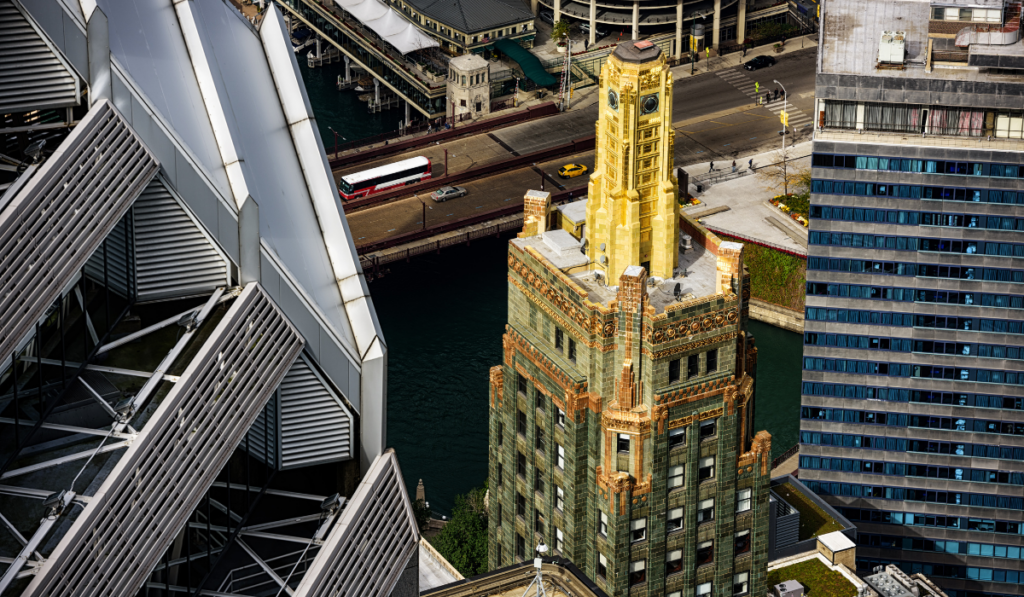
The epitome of the Chicago Prohibition scene is the Chicago skyline, cleverly nicknamed the “champagne bottle building,” formerly known as the Carbide and Carbon Building. Learn more about this beautiful 1929 addition on an upcoming Chicago Crime Tour or Night Crimes Tour. Prohibition was not welcome in Chicago.
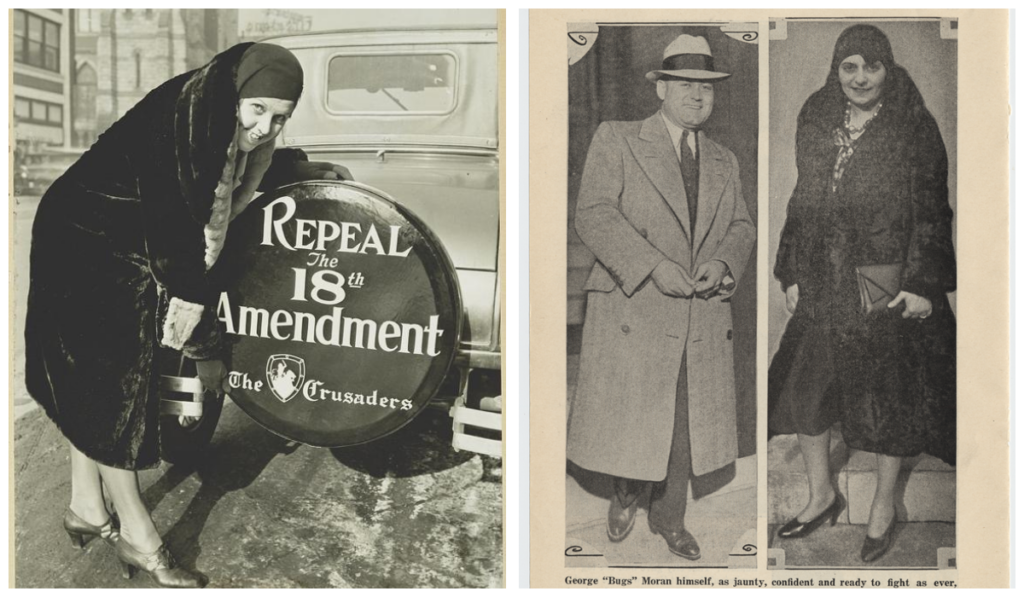
1920s Gangsters Fashion
The music and gin flowed through the streets of Chicago, and with it came the unmistakable style of the era. 1920s gangster fashion was just as iconic as the figures who wore it—feathers to fedoras, wing tips to kitten heels, pearls to pinstripes. Flapper dresses and bowler hats stole the spotlight, capturing the elegance and energy of the time. This distinctive style became a defining part of the Chicago experience, setting the stage for the fashion that would come to symbolize the gangster era.
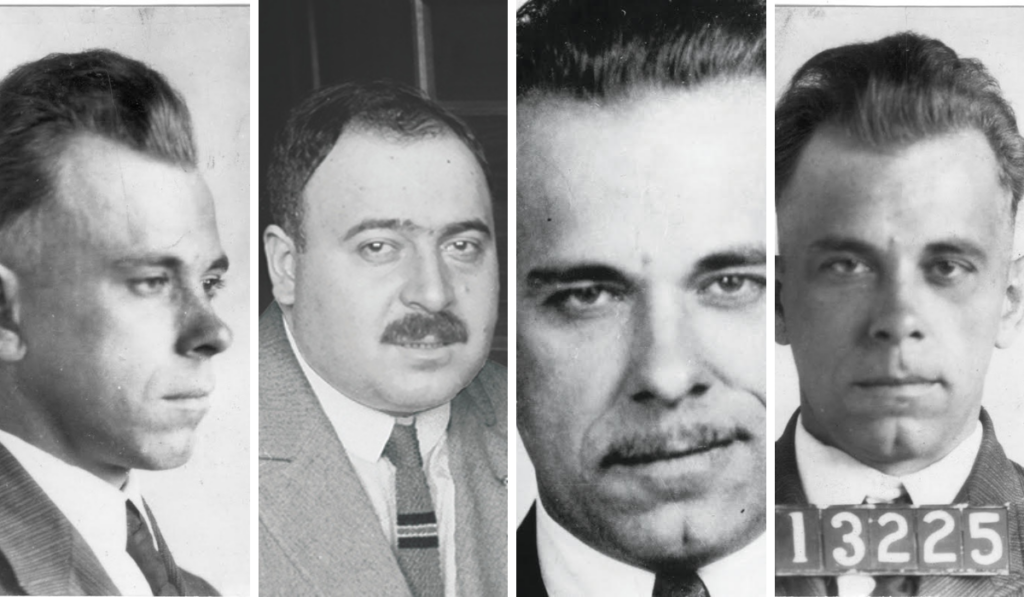
Chicago Gangsters in the 1930s – The Depression Era
December 5, 1933, marked the end of Prohibition and the repeal of the 18th Amendment. This law change dramatically altered the landscape of gangsters in Chicago. The Great Depression also impacted the spending power of those who patronized Chicago gangs. When the stock market crashed in 1929, and WW1 weighed heavily on most shoulders, thoughts of fun were not top of mind. Al Capone started a soup kitchen, one of many efforts to help with the crisis. When money is tight, not many can afford the lifestyle of the gangster in Chicago in the 1930s. With tensions high, it was increasingly difficult, though not impossible, to be a gangster in Chicago in the 1930s.
Though the gangster era belongs to the past, its legacy is still visible in Chicago’s streets, architecture, fashion and neighborhoods. From former speakeasies to historic hangouts, these landmarks offer a window into the stories that defined the city for decades. The Chicago Crime Tour and Night Crimes Tour provide a unique way to dive deeper into Chicago gangster history, connecting locals and visitors with the events and mobsters that shaped one of Chicago’s most intriguing chapters. 1920s gangster fashion is still popular today. Learn the stories, dress the part and have fun on an upcoming Chicago tour.